CASE 02 / LOCAL AGENT WORKSPACE + REMOTE
智能体中枢 · 2026 · ACTIVE
AGENTHUB
A desktop-first workspace for creating, resuming, and remotely controlling official coding-agent sessions from Web and Android.
AgentHub connects official Codex and Claude Code runtimes to one local workspace, then exposes authorized sessions to its Web and Android clients through a replayable remote layer.
The current AgentHub workspace version across the active product line.
Desktop is the primary workspace; Web and Android continue authorized sessions remotely.
Acknowledgement, a local outbox, and replay recover event delivery after reconnects.
AgentHub controls official Codex and Claude Code sessions instead of replacing their inference loops.
01 / Screenshots & UI
A look at the interface.
Screenshots taken from actual running builds.
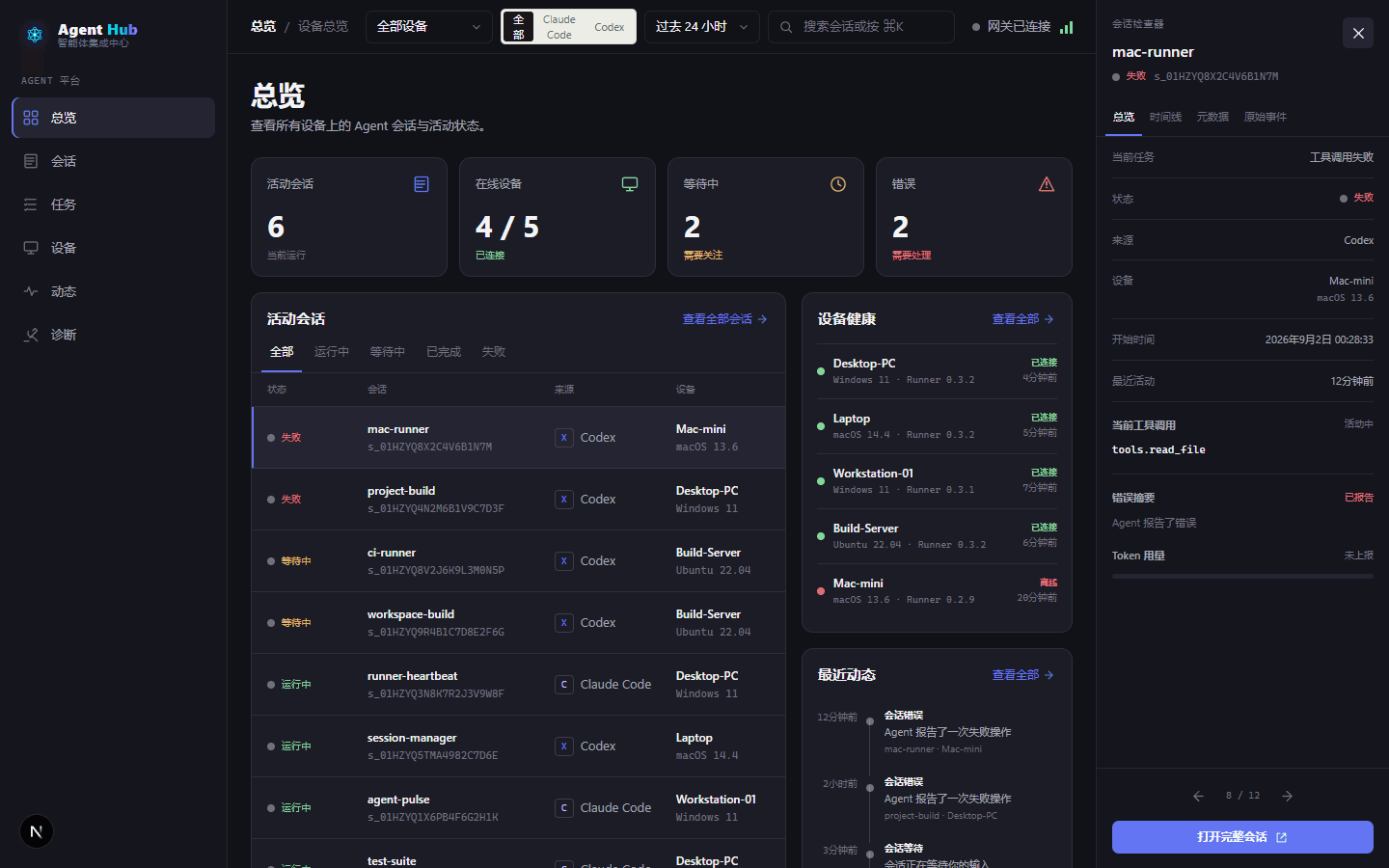
A single workspace view makes the health of a distributed agent fleet legible at a glance.
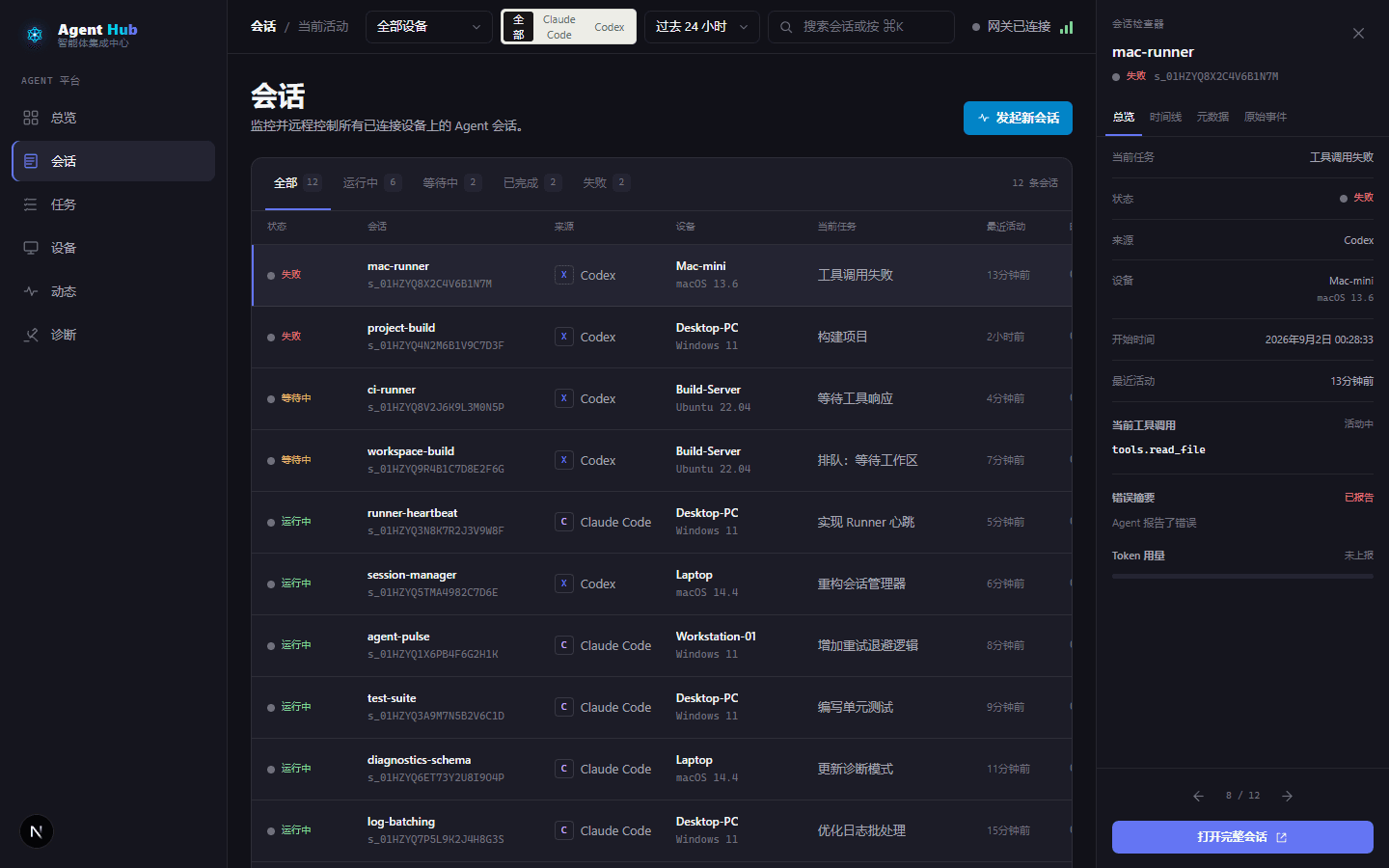
The session queue and inspector expose the next human decision without exposing private prompts or code.
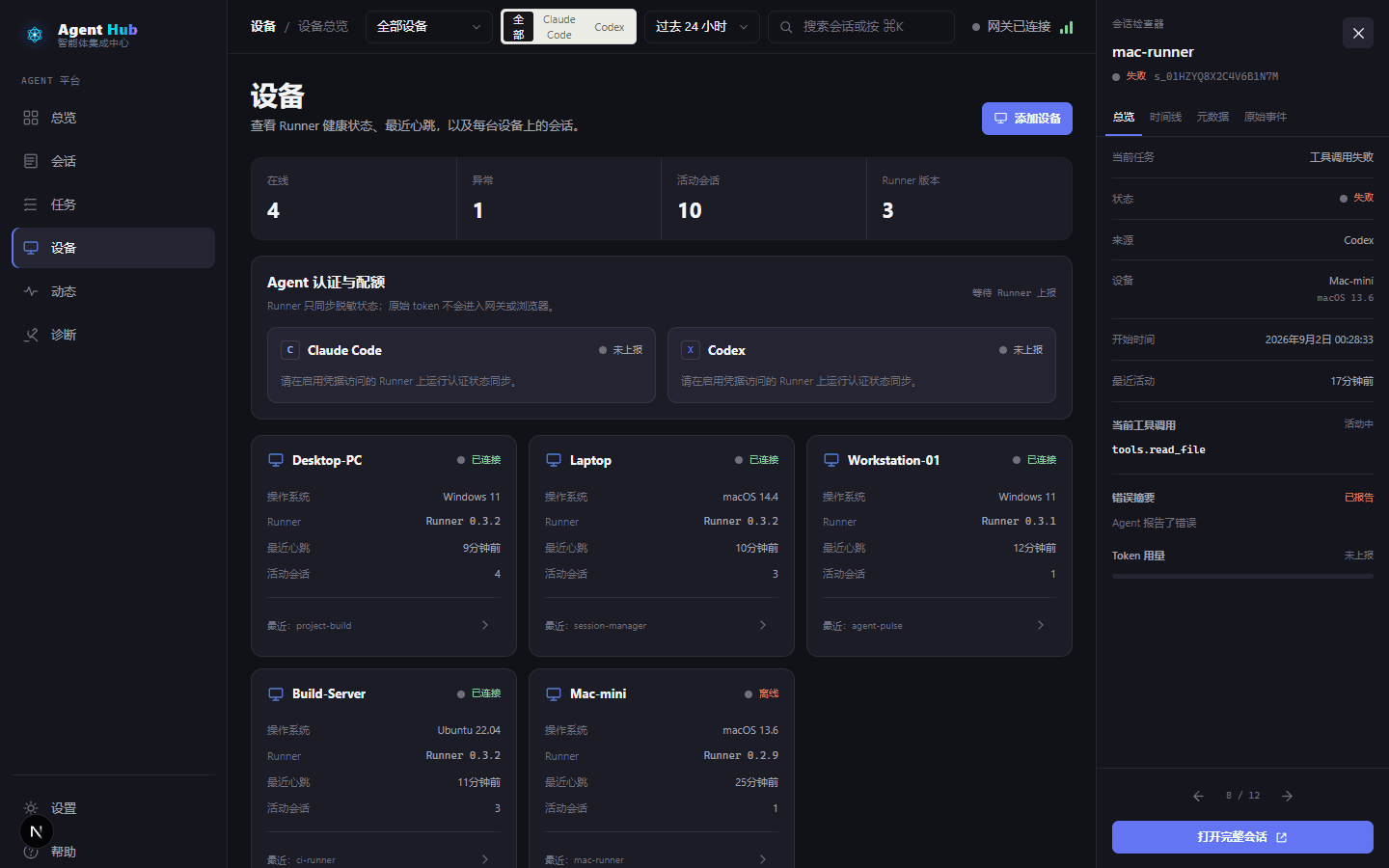
Device health, runner versions, and last heartbeats help an operator distinguish an offline machine from a waiting task.
02 / Why build this
What I worked on
Product, protocol, native host, desktop, Web, and Android
Once several coding agents run across several workspaces and machines, status becomes fragmented. A remote dashboard must improve awareness without asking users to upload their private work.
Use a workspace-first model, one multiplexed runner connection, signed events, ACK plus replay delivery, and strict metadata filtering at the capture boundary.
03 / How it works
Execution flow.
- 01
Observe
Local adapters read agent hooks and session files without interrupting the coding process.
- 02
Filter
Only declared status, capability, and timing metadata crosses the capture boundary.
- 03
Multiplex
One runner maintains multiple workspace-aware WebSocket streams to the gateway.
- 04
Replay
Signed events are acknowledged, persisted, and replayed after a reconnect when needed.
- 05
Operate
The Web console exposes launch profiles, slash routes, approvals, and diagnostics.
04 / Trade-offs
A few design choices along the way.
Make workspace the primary noun
Sessions and devices become understandable when they are grouped by the workspace an operator actually cares about.
Treat capture and transport separately
A network outage must never block local observation or force the runner to resend unfiltered content.
Prefer explicit capabilities
Agents advertise what they can do, while launch profiles and approvals keep control visible to the operator.
05 / Verified details
Notes and numbers taken directly from local configs and tests.
Capture fixtures assert that code, prompts, shell output, and full paths are removed before transport.
VERIFIEDACK, replay, and local queue behavior cover disconnects, restarts, and delayed gateway responses.
VERIFIEDThe desktop integration discovers existing local Claude Code and Codex sessions without reading their secrets.
VERIFIEDA deterministic local preview exercises overview, session inspector, device health, and diagnostic states.
VERIFIED06 / Stack & Timeline
Built local adapters, normalized session state, and added the durable runner outbox.
Connected signed WebSocket transport, gateway storage, and the Web console.
Connected the restored desktop workspace to native Codex sessions and replayable Web/Android remote control.